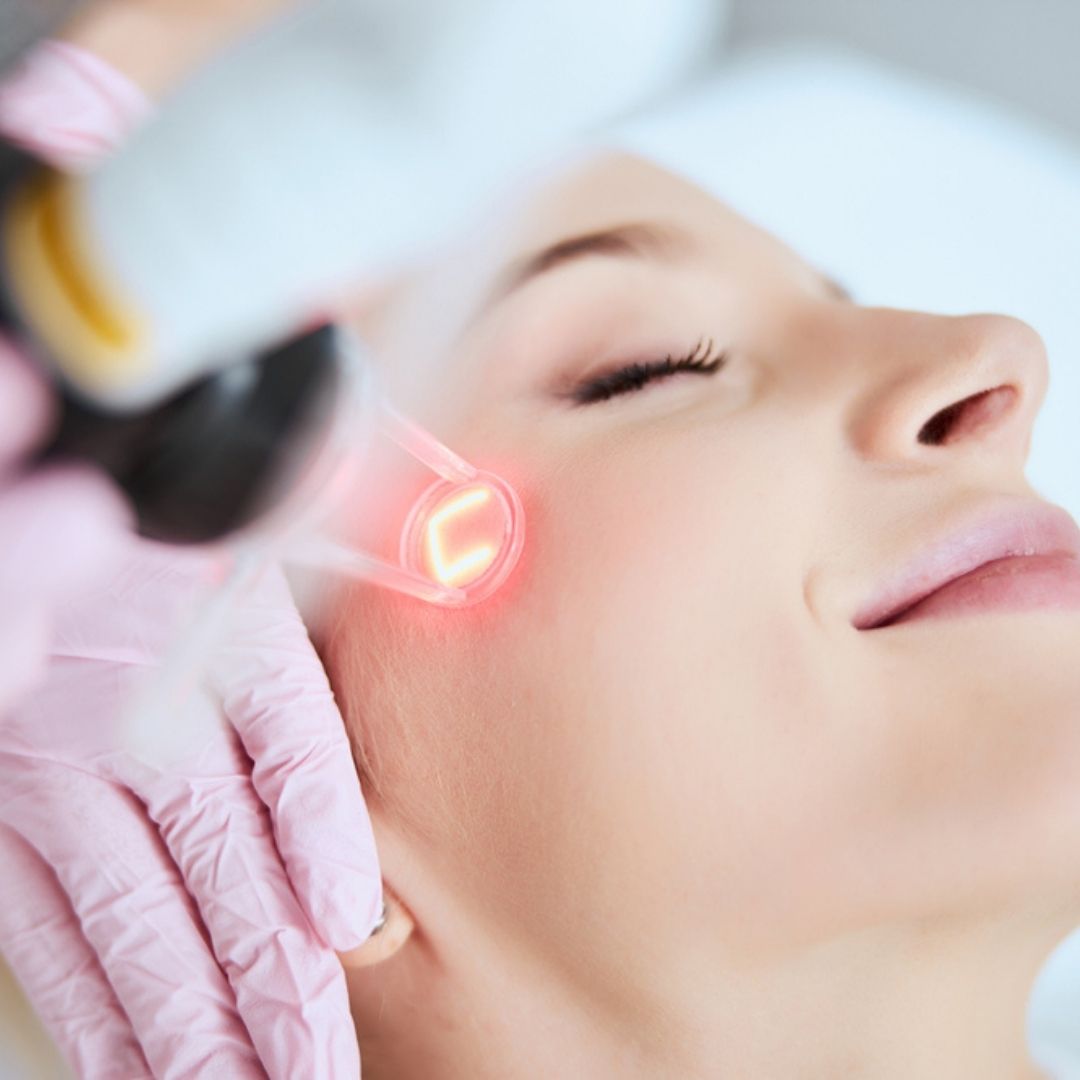
Dermatologist-led ablative resurfacing • Alsancak, Izmir
Fractional CO₂ laser creates microscopic columns of controlled ablation and heat while leaving intervening skin untreated. It may improve selected atrophic acne scars, textural irregularity, fine lines and certain scars, but it is not a universal treatment for every pore, pigment problem or form of skin laxity. Appropriate diagnosis, conservative parameter selection and structured wound care are central to both benefit and safety.
- Scar-specific planning
- Realistic resurfacing
- Recovery and wound care
- Pigment-risk assessment
What is fractional CO₂ laser?
A carbon dioxide laser emits light at a wavelength of approximately 10,600 nm. Water—the main target, or chromophore, for this wavelength—absorbs the energy. In ablative treatment, this interaction vaporises very small portions of tissue and produces a surrounding zone of controlled thermal coagulation. The wound-healing response that follows can reorganise collagen and gradually change surface texture.
“Fractional” describes the delivery pattern. Instead of removing the entire surface in one continuous field, the device places numerous microscopic treatment columns with untreated tissue between them. These intervening areas support re-epithelialisation and generally allow faster recovery than traditional fully ablative resurfacing. Fractional treatment is still ablative, however: it disrupts the skin barrier and requires wound care. It should not be presented as a facial, a painless procedure or a treatment with no downtime.
Energy, density, pulse characteristics, stacking and the number of passes can make two fractional CO₂ sessions very different. A low-density focal treatment and an intensive full-face resurfacing session do not have the same tissue effect, recovery period or complication profile.
The device name alone does not define the treatment
Clinical effect is determined by how the device is used, not simply by the label “fractional CO₂.” The target, skin thickness, anatomical zone, scar morphology and tendency to pigment all influence parameter selection. More heat or greater coverage is not automatically better; increasing treatment intensity may increase recovery time and the likelihood of prolonged redness, infection, pigment change or scarring.
A dermatologist may use different settings within the same face. Defined scars can sometimes receive focal passes while surrounding skin receives lower-density blending. Thin areas and areas with fewer pilosebaceous units may need particular caution because their healing capacity and tolerance are not identical to the cheeks.
What concerns may be considered for fractional CO₂ laser?
Atrophic acne scars
Selected rolling and boxcar scars may improve through ablation and collagen remodelling. Deep, narrow or tethered scars often require additional scar-specific methods rather than repeated full-field laser alone.
Texture and selected fine lines
Fractional resurfacing may soften rough texture and certain fine lines, particularly when surface change and photoageing coexist. It does not reproduce a surgical lift or remove significant excess skin.
Selected surgical or traumatic scars
Some mature scars may become less conspicuous or more pliable. Scar age, colour, elevation, symptoms, location and tendency to keloid must be assessed before a laser is chosen.
Selected stretch marks
Fractional CO₂ may be one option for some striae, but response is variable and complete removal is unrealistic. Colour, age, site and skin type influence whether another approach is preferable.
Other uses exist, but a long indication list should not replace diagnosis. A brown patch may represent a solar lentigo, post-inflammatory hyperpigmentation, melasma or another lesion; each has a different treatment pathway. Similarly, “uneven texture” may come from active acne, scarring, enlarged sebaceous structures, dermatitis or chronic sun damage. The condition should be named before the device is selected.
For broader scar planning, see the acne scar treatment and scar and stretch mark treatment pages.
Acne scars are not one uniform target
Atrophic acne scars are commonly described as rolling, boxcar and ice-pick scars, but many patients have a mixed pattern. There may also be active acne, enlarged pores, redness and brown post-acne marks. Treating all of these with the same laser pass can produce an incomplete result and unnecessary risk.
- Rolling scars: broad depressions may be partly tethered by fibrous bands. Subcision or another release technique can be more important than increasing laser intensity.
- Boxcar scars: superficial and moderately deep scars may respond to fractional resurfacing; sharply edged or deep lesions may need focal or surgical techniques.
- Ice-pick scars: narrow, deep tracts are often less responsive to field resurfacing and may be approached with focal chemical reconstruction or punch techniques.
- Red and brown marks: these are colour changes rather than tissue loss. Vascular, pigment or medical acne management may be more appropriate.
- Active acne: ongoing inflammatory disease should usually be controlled so that new scars do not continue to form during a resurfacing programme.
Evidence supports fractional CO₂ laser as one option for atrophic acne scars, but study outcomes vary with scar type, settings, session number, skin phototype and outcome scale. Published trials report improvement—not complete scar removal—and even within the same patient some scars respond better than others. Standardised photographs taken in consistent lighting help separate true change from temporary swelling or photographic differences.
The American Academy of Dermatology notes that laser treatment can make a scar less noticeable but cannot remove it. A realistic plan defines which scar component is being targeted and what degree of partial improvement would be meaningful.
What is fractional CO₂ laser not designed to do?
Fractional CO₂ is a resurfacing tool, not a universal “skin renewal” solution. It should not be chosen simply because a patient wants the strongest available procedure. The following distinctions are important:
- Melasma: heat and inflammation can aggravate pigment in some patients. Fractional ablative laser is not a routine first-line monotherapy for every melasma case.
- Facial redness and visible vessels: vascular lasers or selected light-based systems generally target haemoglobin more specifically.
- Brown lesions: a lesion should be diagnosed before it is lasered. Suspicious or changing lesions require medical evaluation, not cosmetic resurfacing.
- Deep folds or volume loss: resurfacing may improve fine surface lines but cannot replace lost volume or reposition descended tissue.
- Marked skin laxity: collagen remodelling may provide limited textural firmness; it does not equal surgery and cannot remove redundant skin.
- Active inflammatory disease: infection, dermatitis, uncontrolled rosacea or inflammatory acne may need medical treatment before an elective laser session.
For predominantly red or brown photodamage, a pigment- or vessel-directed platform such as BBL may be considered after diagnosis. For a dermal scar target with less surface ablation, RF microneedling may be discussed. These methods are not interchangeable, and none is automatically superior for every patient.
Who may be suitable, and when should treatment be postponed?
May be considered
- A defined scar or resurfacing target that can reasonably respond
- Realistic expectations of gradual, partial improvement
- Ability to complete wound care and strict sun protection
- Time available for visible redness, crusting and peeling
- Willingness to return for review if healing deviates from the plan
Postpone or reassess
- Active herpes, bacterial or fungal infection, open wound or sunburn
- Recent tanning or inability to avoid significant ultraviolet exposure
- Active eczema, psoriasis or another uncontrolled dermatosis in the area
- Uncontrolled acne or inflammation when it increases procedural risk
- History of keloid, delayed healing or marked post-inflammatory pigment change
Pregnancy and breastfeeding generally lead to postponement of an elective ablative resurfacing procedure. Diabetes, immune suppression, connective-tissue disease, bleeding tendency, smoking, previous radiation, facial surgery, reduced sensation and all prescribed or non-prescribed medications should be discussed. A history of cold sores is particularly relevant because facial laser procedures may reactivate herpes simplex.
Recent or current isotretinoin use should be disclosed. The decision should be individualised according to dose, timing, healing history, treatment intensity and current evidence rather than handled through an unsupervised fixed rule. Do not stop isotretinoin, anticoagulants, antiplatelet medication or any other prescribed medicine on your own.
Darker skin tones are not an automatic exclusion, but the risk of post-inflammatory hyperpigmentation can be higher and prolonged. Conservative settings, pre-treatment preparation in selected patients, careful timing, strict photoprotection and sometimes choosing a different modality may be appropriate. “Suitable for every skin type and every season” is not a medically responsible guarantee.
How do you prepare for fractional CO₂ laser?
Diagnosis and treatment map
The dermatologist examines the target, distinguishes scar depth from redness or pigment, reviews skin phototype and decides whether full-field, focal or combination treatment is appropriate.
Medical and medication review
Cold sores, keloids, pigment reactions, healing problems, allergies, chronic disease, pregnancy, smoking and all medicines or supplements are documented. Preventive antiviral treatment may be prescribed when indicated.
Sun and skincare planning
Tanning and sunburn should be avoided. Retinoids, exfoliating acids, bleaching agents and other active products may need an individual pause or preparation schedule; follow the clinician’s written plan.
Recovery logistics
Plan around work, travel, important events, exercise and sun exposure. Arrange gentle cleanser, the prescribed barrier-care product and suitable sun protection before treatment day.
Pre-treatment instructions vary with the patient and the planned intensity. Advice found online should not be used to stop medication or apply strong lightening products without supervision. If the skin is tanned, irritated, infected or unexpectedly inflamed on the day, postponement may be safer than proceeding.
What happens during the procedure?
The treatment area is cleaned and baseline photographs may be taken with consent. A topical anaesthetic is commonly used and allowed adequate contact time before being completely removed. Eye protection appropriate for a CO₂ laser is essential for the patient and everyone in the treatment room.
The dermatologist selects settings by area and target. The handpiece places fractional microcolumns in a planned pattern while overlap, tissue response and patient comfort are monitored. Focal scar treatment, blending at the edges or different settings across facial zones may be used. The procedure time therefore depends on the surface area, anaesthetic phase and complexity of the treatment map; a universal 20- or 45-minute promise is not meaningful.
Heat, stinging and a burning sensation can occur despite topical anaesthesia. Immediately afterwards, redness, swelling and a sunburn-like feeling are expected. Depending on treatment intensity, there may be pinpoint oozing or a bronzed appearance. The skin is assessed, the initial wound-care product is applied as appropriate and written instructions are provided.
The goal is a controlled tissue response matched to the indication and recovery capacity. Aggressive overlap, excessive density or repeated passes can increase thermal injury without guaranteeing a better long-term result.
What is the recovery timeline?
Recovery varies substantially. Density, pulse energy, passes, treatment area, skin type, previous procedures and individual healing all matter. The outline below describes a common pattern, not a promise or a substitute for the instructions given after your procedure.
A five-to-seven-day social recovery is possible after some protocols, but it should not be guaranteed. Stronger treatment can mean a longer period of visible redness or crusting, and “back to normal” has different meanings for barrier closure, makeup use, work appearance and complete resolution of redness.
Temporary swelling can make scars and fine lines appear smoother very early. This should not be mistaken for the final result. Meaningful comparison begins after acute inflammation resolves and is best made with standardised photographs over subsequent months.
Fractional CO₂ laser aftercare
The treated surface should be managed as a controlled wound. Follow the written plan supplied for the actual settings used; aftercare for a mild focal session may differ from intensive full-face treatment.
- Cleanse gently with the recommended method and frequency; do not scrub or use a cleansing brush.
- Use only the advised barrier ointment or moisturiser. Avoid essential oils, fragranced products, home remedies and unplanned topical antibiotics.
- Do not pick flakes or crusts. Let them separate naturally.
- Avoid retinoids, exfoliating acids, scrubs, alcohol-based toners and irritating active ingredients until the dermatologist confirms barrier recovery.
- Avoid direct sun, tanning beds and intentional tanning. Use the advised broad-spectrum sun protection once appropriate for the healing stage.
- Delay swimming, sauna, steam rooms, very hot showers, heavy exercise and other heat or contamination exposure for the period advised.
- Do not use makeup until the surface is sufficiently re-epithelialised and permission has been given.
- Take prescribed antiviral or other medication exactly as directed; do not share or self-start antibiotics.
Sun protection matters both before and after treatment. The American Academy of Dermatology advises against laser treatment on tanned or sunburned skin and emphasises protection during healing because ultraviolet exposure can contribute to discoloration and other complications.
When do results appear, and how many sessions are needed?
Once crusting and swelling subside, the surface may begin to look smoother. Collagen remodelling is slower and can continue over several months. Scar improvement is gradual, variable and usually incomplete. Age, scar type, skin biology, previous treatment, acne control, parameter selection and aftercare all influence the outcome.
There is no universal package. A patient with a limited group of shallow boxcar scars may have a different plan from someone with widespread mixed scars. Some objectives may be approached with one more intensive session; others with staged, lower-density sessions or a combination of focal and field treatments. The response and adverse effects after each session should guide whether to repeat, adjust or change the method.
Published studies often use multiple treatments and different follow-up periods, so a result from one protocol cannot be promised for every device or patient. In a randomised controlled trial of atrophic acne scars, fractional CO₂ improved texture and atrophy compared with untreated skin, but outcomes were described as improvement rather than elimination. Another direct trial found both ablative fractional CO₂ and microneedle RF improved scar texture after a single treatment, with different recovery and discomfort profiles.
Maintenance should not be automatic. Continued acne, ultraviolet exposure, smoking and normal ageing can affect skin quality, but repeat ablative treatment should be considered only after the previous benefit, healing and cumulative risk are reviewed.
Fractional CO₂ laser compared with RF microneedling, Dermapen and BBL
| Method | Main tissue interaction | Potentially useful targets | Recovery profile | Important limitation |
|---|---|---|---|---|
| Fractional CO₂ laser | Ablative microcolumns with surrounding thermal coagulation; strong surface and dermal remodelling effect | Selected atrophic scars, texture, fine lines and certain mature scars | Barrier disruption, crusting, peeling and redness; intensity dependent | Higher pigment and wound-care burden; not ideal for every skin type or pigment disorder |
| RF microneedling | Needles deliver radiofrequency heat at selected tissue depths | Selected scars, texture and mild laxity | Usually less surface ablation, but swelling, marks and thermal injury remain possible | Depth and energy errors can injure deeper structures; not automatically safer or superior |
| Conventional microneedling / Dermapen | Mechanical microchannels without laser ablation or RF heat | Selected mild scars and textural targets | Often shorter visible recovery, depending on depth and technique | May be insufficient for some deeper scars; still requires sterile technique |
| BBL / IPL | Filtered light targets melanin or haemoglobin rather than ablating skin columns | Selected sun spots, redness or visible vessels after diagnosis | Often shorter, but pigment darkening, redness or burns can occur | Does not release tethered scars or provide the same ablative resurfacing effect |
The correct choice is based on the dominant problem and acceptable risk, not a ranking of “weak” and “strong” devices. For mixed acne scars, subcision, focal chemical reconstruction, punch techniques or staged combinations may be more rational than repeatedly increasing laser intensity. Combination treatment does not necessarily mean applying several procedures on the same day.
PRP, moisturising dressings and other adjuncts have been studied, but protocols and evidence quality vary. They should not be marketed as compulsory additions or guaranteed accelerators of healing. Any product placed on recently ablated skin requires attention to sterility, composition, evidence and regulatory status.
Expected effects, complications and warning signs
Expected early effects
- Redness, warmth, stinging and tenderness
- Swelling, particularly around the eyes
- Bronzing, pinpoint crusts, dryness and peeling
- Temporary sensitivity, itching or tightness
- Temporary worsening in the visible contrast of pigment
Possible complications
- Prolonged erythema or delayed barrier recovery
- Post-inflammatory hyperpigmentation or hypopigmentation
- Bacterial, viral or fungal infection
- Acneiform eruption, milia or irritant/contact dermatitis
- Persistent textural change, visible treatment borders or scarring
Risk increases with inappropriate patient selection, excessive density or energy, overlapping passes, recent tanning, picking, poor wound care and delayed treatment of infection. Periocular procedures require particular anatomical expertise and laser-specific eye protection. Rare but serious eye injury is possible when protection and technique are inadequate.
Increasing pain after initial improvement, spreading redness, marked asymmetric swelling, pus, foul odour, fever, groups of blisters, grey or black areas, persistent bleeding, new visual symptoms or a rapidly worsening rash require prompt medical assessment. Do not wait for a routine control appointment or self-treat with leftover medication.
Post-inflammatory pigment change deserves special attention in Mediterranean and darker skin tones. It may appear after the surface has healed and can persist for weeks or months. Conservative planning and photoprotection reduce risk but cannot eliminate it. Hypopigmentation and scarring are less common but can be longer-lasting.
Fractional CO₂ laser prices in Izmir
Price cannot be determined responsibly from the phrase “fractional laser” alone. The indication, size and number of areas, focal versus full-field plan, treatment intensity, anaesthesia and aftercare requirements all affect the procedure. A scar assessment may also show that laser alone is not the most appropriate first step.
For current personalised treatment and pricing information, please use the contact page. In Türkiye, healthcare communication and pricing are subject to legal and professional rules; current information should be obtained directly from the clinic after assessment.
Frequently asked questions
Does fractional CO₂ laser completely remove acne scars?
No. It may reduce the depth or visibility of selected scars, but complete removal should not be promised. Deep ice-pick scars, tethered rolling scars and sharply edged boxcar scars may require different focal or surgical methods.
Is fractional CO₂ laser painful?
Topical anaesthesia is commonly used, but heat, stinging and burning sensations can still occur. Comfort varies with area, settings, passes and individual sensitivity. “Completely painless” is not a realistic guarantee.
How many days of downtime should I expect?
There is no single number. Crusting and peeling commonly occupy several days, while redness or sensitivity may last longer. Higher density, stronger settings, non-facial sites and individual healing can extend recovery beyond a typical social-downtime estimate.
Can I wear makeup after treatment?
Makeup should wait until the treated surface has sufficiently re-epithelialised and the dermatologist confirms it is appropriate. Applying products too early may irritate the wound or introduce contamination.
Can fractional CO₂ be performed in summer?
The calendar alone is not the deciding factor. Recent tanning, unavoidable sun exposure, skin phototype, indication and ability to maintain strict photoprotection matter. In sunny conditions or before a beach holiday, postponement may be the safer plan.
Is it suitable for darker skin tones?
It may be considered in selected patients, but post-inflammatory hyperpigmentation risk can be higher. Conservative parameters, preparation, sun protection and sometimes choosing another treatment should be discussed rather than claiming universal suitability.
Can it treat melasma?
Fractional ablative lasers have been studied in melasma, but heat and inflammation can worsen or trigger pigment recurrence. They are not a routine first-line monotherapy for every melasma patient. Diagnosis and a long-term pigment-control plan are essential.
Is antiviral medication always needed?
Not for every treatment area or patient. A history of facial cold sores, the area treated and the intensity of resurfacing influence whether preventive antiviral medication is prescribed. Tell the dermatologist about even infrequent past episodes.
Can I have treatment while taking isotretinoin?
Current or recent isotretinoin use must be disclosed. Timing should be decided individually according to the medicine, dose, procedure intensity, healing history and current evidence. Do not stop treatment without consulting the prescribing physician.
Is fractional CO₂ better than RF microneedling?
Neither is universally better. CO₂ provides ablative surface resurfacing and often a greater wound-care burden; RF microneedling delivers heat through needles with less surface ablation but has its own depth-related risks. Scar type, skin type and acceptable recovery guide the choice.
When will I see the final result?
Early swelling is not the final result. Surface change becomes clearer after healing, while collagen remodelling may continue for several months. Consistent photographs and follow-up examinations are more reliable than daily mirror checks.
Can fractional CO₂ tighten loose skin?
Remodelling may create limited improvement in fine texture and mild firmness. It cannot remove excess skin, reposition tissue or reproduce a surgical lift. Marked laxity requires a different discussion.
Selected medical references
- American Academy of Dermatology — Ten things to know before laser treatment for a scar.
- The Use of a Fractional Laser in Acne Scar Treatment: A Systematic Review.
- Fractional CO₂ laser resurfacing for atrophic acne scars: a randomised controlled trial.
- Fractional CO₂ laser versus microneedle radiofrequency for acne scars: a randomised split-face trial.
- Fractional CO₂ laser for hypertrophic scars: a systematic review of randomised trials.
References support general patient education and do not determine an individual treatment plan. Study devices, settings, patient populations and outcome measures differ.
Plan resurfacing around the diagnosis—not the device name
A consultation can distinguish scar depth, active acne, redness, pigment and laxity; assess healing and pigment risks; and determine whether fractional CO₂, another method or a staged combination is appropriate.