
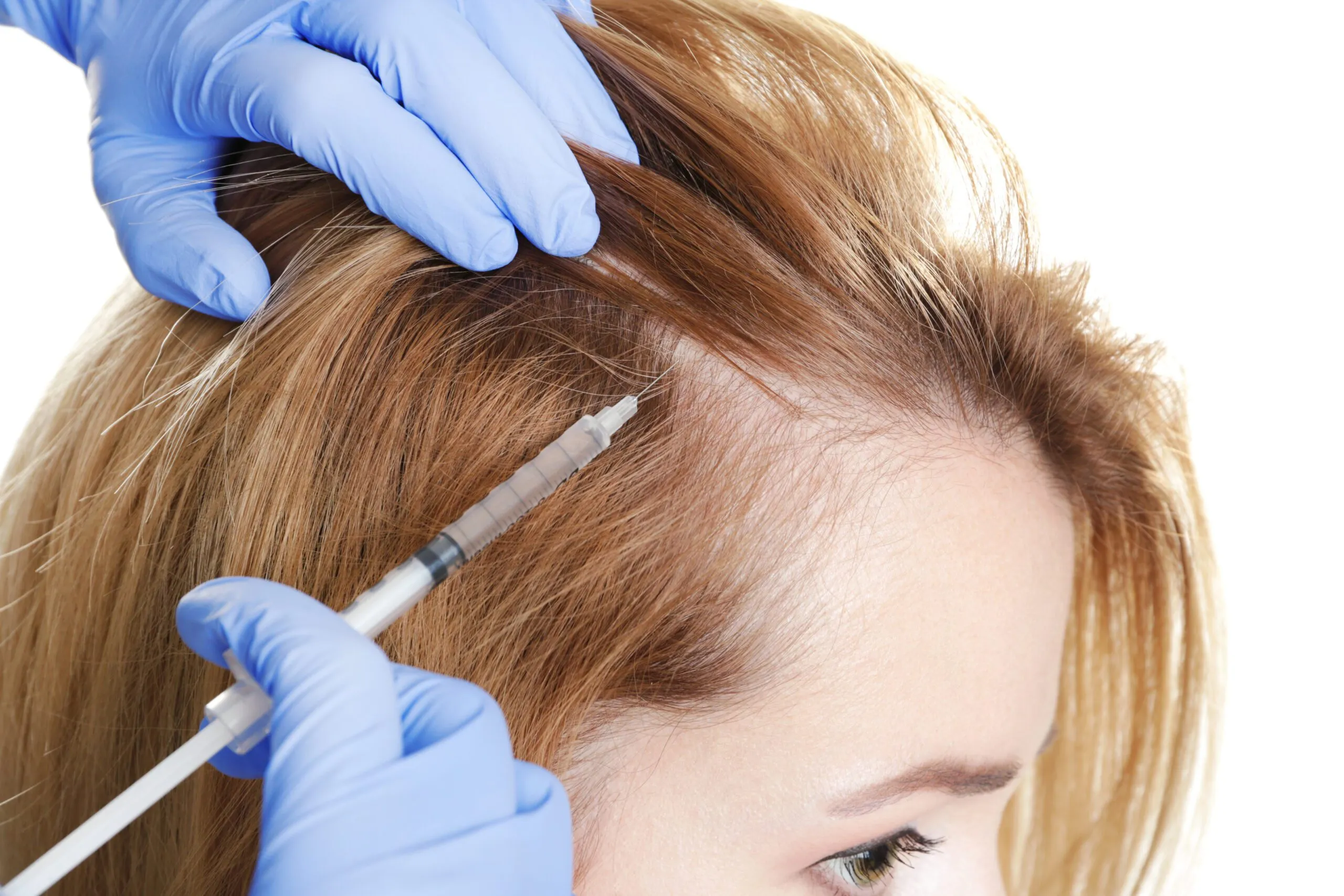
Hair loss is one of the most common dermatological concerns affecting both men and women. Many people experience gradual hair thinning, receding hairlines, or increased shedding at different stages of life. Hair loss has multiple causes, and treatment effectiveness depends on the diagnosis. Medical therapy, treatment of an underlying trigger or scalp disease, and selected procedures may be considered according to the type of alopecia, severity, medical history and treatment goals.
At Dr. Sedef Demirer’s dermatology clinic in Izmir, hair loss treatments are planned individually after evaluating the patient’s scalp health, medical history, and the underlying cause of hair loss.
Depending on the diagnosis, management may include medical treatment, correction of an underlying trigger or scalp disorder and selected procedures such as PRP or microneedling. Mesotherapy formulations and evidence vary, so it should not be presented as a standard treatment for every type of hair loss.
Understanding Hair Loss
Hair growth occurs in cycles that include the growth phase (anagen), transitional phase (catagen), and resting phase (telogen). When this cycle is disrupted, hair follicles may shrink or enter the resting phase prematurely, resulting in hair thinning or hair loss.
Hair loss may occur due to several factors, including:
• Genetic predisposition
• Hormonal changes
• Stress
• Nutritional deficiencies
• Autoimmune conditions
• Scalp disorders
Accurate diagnosis is essential because each type of hair loss requires a different treatment strategy.
Common Types of Hair Loss


Androgenetic Alopecia
Androgenetic alopecia is the most common cause of hair loss in both men and women. It occurs due to genetic sensitivity of hair follicles to androgens. Over time, hair follicles become smaller and produce thinner hairs.
Telogen Effluvium
Telogen effluvium is characterized by diffuse hair shedding across the scalp. It often occurs after stress, illness, hormonal changes, or nutritional deficiencies.
Alopecia Areata
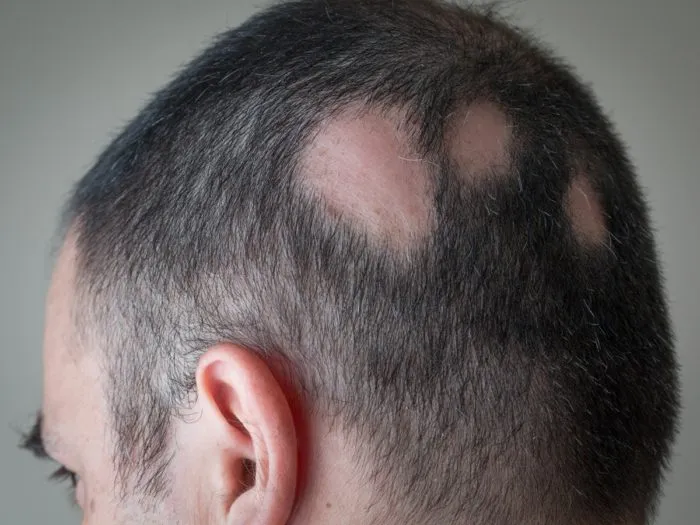
Alopecia areata is an autoimmune condition that causes patchy hair loss when the immune system targets hair follicles.
Hair Loss Related to Scalp Disorders
Conditions such as seborrheic dermatitis, psoriasis, or inflammatory scalp diseases may also contribute to hair loss.
Because treatment depends on the underlying cause, dermatological evaluation is essential before starting therapy.
Hair Loss Evaluation
During a dermatological consultation, several factors are assessed to determine the most appropriate treatment.
Evaluation may include:
• Scalp examination
• Hair density assessment
• Medical history review
• Evaluation of hormonal or metabolic factors
• Dermatoscopic examination of hair follicles
Once the underlying cause is identified, a personalized treatment plan can be created.
PRP Treatment for Hair Loss
Platelet-Rich Plasma (PRP) therapy is one of the most widely used regenerative treatments for hair loss.
You can learn more about this procedure here:
PRP treatment in Izmir
PRP is prepared using the patient’s own blood. After centrifugation, the platelet-rich portion is injected into the scalp.
Platelets release growth factors that stimulate hair follicle activity and improve blood circulation in the scalp. These biological signals can help prolong the hair growth phase and support thicker hair growth.
When PRP is considered, the number and interval of sessions should be individualized according to the diagnosis, protocol, response and tolerability rather than assumed as a fixed series.
Microneedling for Hair Loss
Scalp microneedling has been studied as an adjunct in selected forms of hair loss, particularly androgenetic alopecia, but protocols and evidence are not identical across diagnoses.
Controlled micro-injury can trigger wound-healing signals, but this should not be described as guaranteed follicle regeneration. Applying topical medication through recently treated skin also requires product-specific medical guidance because absorption and irritation can change.
Some studies suggest that microneedling may add benefit to treatments such as minoxidil in selected androgenetic alopecia protocols, but study designs and treatment parameters vary and this should not be generalized to every patient or diagnosis.
Mesotherapy for Hair Loss
Hair mesotherapy is a broad term for intradermal scalp injection protocols whose ingredients can vary considerably. Evidence, safety and expected benefit depend on the formulation and diagnosis, so vitamin or nutrient mixtures should not be assumed to improve follicle metabolism or scalp circulation in every patient.
The role of mesotherapy should be defined by the exact formulation and diagnosis. Expected benefit is not uniform, and it should not replace established medical treatment or investigation of an underlying cause when those are indicated.
You can read more about this treatment on our
mesotherapy in Izmir page.
Combination Treatments for Hair Restoration
Combination treatment is not automatically better for every type of hair loss. The plan should follow the diagnosis. Depending on the cause and evidence for that condition, a plan may involve medical treatment, PRP, microneedling, mesotherapy, scalp-directed treatment, a staged combination, or no procedure at all. Procedures should not replace investigation of an underlying medical cause when one is suspected.
Supporting Scalp Health
Healthy hair growth requires a healthy scalp environment.
Supportive dermatological treatments may include professional
skin and scalp care treatments that improve circulation and remove excess oil or buildup.
Improving scalp health may enhance the effectiveness of hair loss treatments.
When Should Hair Loss Treatment Begin?
Early dermatologic assessment can be useful when hair loss is progressive, inflammatory, scarring or otherwise unexplained, but urgency and reversibility depend on the diagnosis. Androgenetic alopecia, telogen effluvium, alopecia areata and scarring alopecia do not share the same natural history, so a universal “treat early for better regrowth” rule is not appropriate.
If you notice increased hair shedding, thinning hair, or changes in hair density, a dermatological consultation can help identify the cause and guide appropriate treatment.
What Results Can Be Expected?
Hair-cycle changes are slow, but the expected timeline varies by diagnosis and treatment. Improvement may take months to assess, while some causes of shedding recover differently and some forms of alopecia may not regrow fully.
Results may include:
• Reduced hair shedding
• Increased hair density
• Thicker hair strands
• Improved scalp health
Follow-up is used to reassess diagnosis, response, adverse effects and whether treatment should be continued, changed or stopped. Ongoing treatment is condition- and therapy-specific and should not be assumed for every patient.
What Affects Hair Loss Treatment Cost in Izmir?
Hair-loss treatment cost depends first on the diagnosis. A person with androgenetic alopecia, diffuse telogen shedding, alopecia areata or an inflammatory scalp disorder may need very different evaluation and treatment. For that reason, price should not be compared as if every case requires the same PRP or mesotherapy package.
- Diagnostic work-up: history, scalp examination, dermoscopy and—when clinically indicated—laboratory testing or other evaluation affect the plan.
- Treatment type: medical therapy, PRP, mesotherapy, microneedling and scalp-directed treatments have different scopes and should be selected by indication.
- Treatment area and density: diffuse thinning, a limited area and a broad scalp treatment are not equivalent in treatment time or material use.
- Session planning: the number and interval of procedural sessions should depend on diagnosis, response and tolerability rather than a fixed prepaid package.
- Combined treatment: more than one method should be included only when each has a clear role in the individual plan.
- Follow-up: response may need reassessment over several hair-growth cycles, especially when medical treatment is also used.
The underlying cause should therefore be established before discussing a personalised treatment fee.
Why Choose a Dermatologist for Hair Loss Treatment in Izmir?
Hair loss can have many underlying causes, and accurate diagnosis is essential for effective treatment.
Dermatologists specialize in conditions affecting the skin, hair, and scalp. A dermatologist can evaluate the underlying cause of hair loss and recommend evidence-based treatments tailored to the patient’s needs.
At Dr. Sedef Demirer’s dermatology clinic in Izmir, hair loss treatments are planned with a personalized approach focused on restoring scalp health and supporting natural hair growth.
Hair Loss Treatments in Izmir
Hair loss can be a challenging experience, but modern dermatology offers multiple solutions to address thinning hair and scalp health.
With early diagnosis and personalized treatment planning, it is possible to slow hair loss, strengthen hair follicles, and support healthier hair growth.
If you are experiencing hair thinning or hair shedding, a dermatological consultation can help determine the most appropriate treatment options for your condition.
Frequently Asked Questions
What is the most effective treatment for hair loss?
The most effective treatment depends on the underlying cause of hair loss. PRP therapy, microneedling, and medical treatments are commonly used options.
How many sessions are required?
There is no universal session number. Medical treatments, PRP, microneedling and other procedures have different schedules, and any repeat treatment should be based on diagnosis, protocol, response and tolerability.
When will I see results?
Hair-cycle changes are slow, but there is no single result date for all diagnoses or treatments. Response is usually assessed over months and interpreted in the context of the underlying condition.
Is PRP treatment safe for hair loss?
PRP uses material prepared from the patient’s own blood, which avoids donor-material exposure, but it is still a medical procedure. Injection-related pain, bruising, swelling, infection risk and variable response should be discussed, and suitability depends on the diagnosis and medical history.
Can hair loss be completely reversed?
In some cases, hair regrowth can occur. However, genetic hair loss often requires ongoing treatment to maintain results.
Is hair loss treatment suitable for women?
Yes, but treatment choice depends on the diagnosis, medical history, reproductive considerations and medication suitability. A treatment appropriate for one pattern of hair loss or one patient may not be appropriate for another.
Hair-loss treatment begins with identifying the underlying pattern and possible causes. For the clinic’s wider skin and hair care approach, visit the dermatologist in Izmir homepage.