
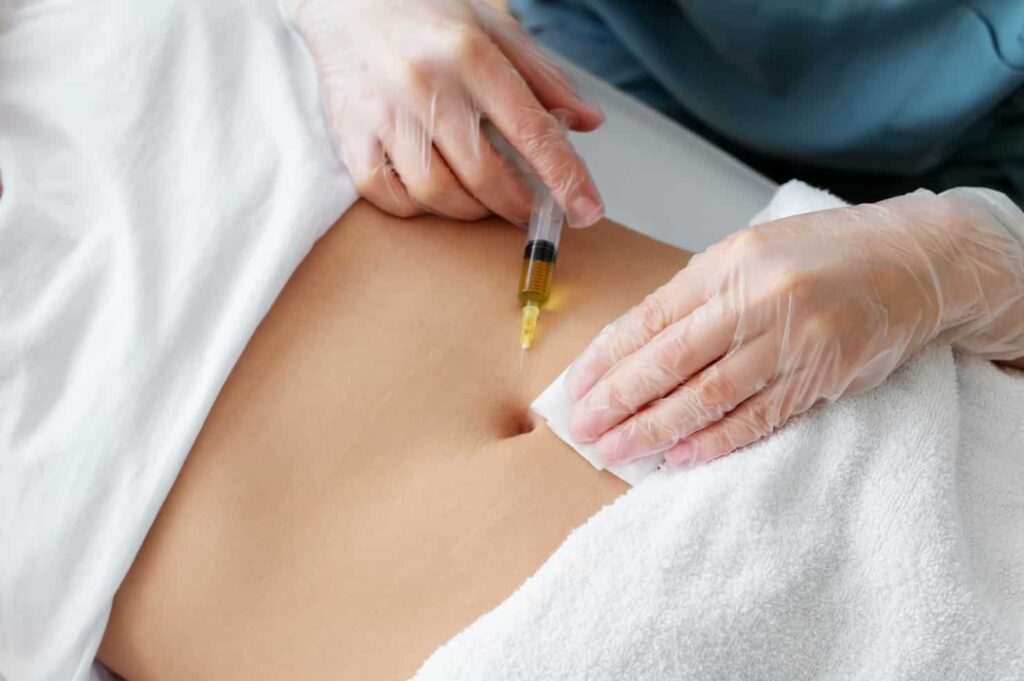
What Is Injection Lipolysis?
Injection lipolysis is an injectable contouring approach used for selected localised fat deposits. The exact formulation, intended treatment area, evidence base and regulatory status are product-specific. Some formulations act by disrupting adipocyte cell membranes, after which the treated tissue is cleared through normal inflammatory and metabolic processes. This is a medical procedure with potential local and systemic adverse effects, not a risk-free method of “melting” fat.
Which Areas Can Be Considered for Injection Lipolysis?
The treatment area cannot be separated from the exact injectable product and its regulatory status. Different formulations are not interchangeable. In the United States, FDA-approved deoxycholic acid injection is approved for moderate-to-severe submental fullness in adults, not for routine treatment of abdominal, arm, thigh or other body fat.
On 15 September 2026, the U.S. FDA added a warning about serious adverse reactions reported when deoxycholic acid was injected outside the submental region. Regulatory status differs between countries and products, so the formulation, intended area, authorization status, evidence and alternatives should be verified before treatment.
For double-chin concerns, the clinician must also distinguish localised submental fat from skin laxity, platysmal anatomy, salivary structures or other causes of contour. Injection lipolysis is not a substitute for liposuction when a larger-volume surgical approach is indicated.
How Is the Procedure Performed?
The procedure depends on the formulation and approved or otherwise appropriate treatment area. After examination and marking, the selected product is injected into subcutaneous fat using a product-specific technique and dose. Local or topical anesthesia may be considered where appropriate. Treatment time and discomfort vary with the area, number of injection points and formulation; a universal 10-minute, “quick and comfortable” protocol should not be assumed.
How Many Sessions Are Needed?
The number of sessions varies depending on:
The size of the treatment area,
The amount of fat to be dissolved, and
The individual response to the treatment.
The number of sessions and interval depend on the product, treatment area, amount of localised fat, response and tolerability. A fixed package or a guaranteed visible change after one session should not be assumed before assessment.
Aftercare: What to Expect After Injection Lipolysis
Recovery varies with the product, dose, treatment area and individual response. Swelling, tenderness, bruising, burning, numbness, itching or firmness can occur, and some reactions may last longer than a few days. These effects should not automatically be labelled “normal” without considering their severity and duration. Significant or worsening pain, skin colour change, ulceration, infection, weakness, difficulty swallowing or other unexpected symptoms require prompt clinical assessment.
Aftercare should follow the exact product and treatment area. Pressure, massage, heat exposure, exercise restrictions or other instructions are not universal and should not be copied from a generic protocol. Diet and exercise may support overall weight management, but they do not guarantee or “activate” a local injection response.
What Affects Injection Lipolysis Cost in Izmir?
Injection lipolysis cost depends on the exact formulation, treatment area and dose rather than on a generic “fat-dissolving injection” package. Product choice and the anatomical area must be considered together because evidence, regulatory status and safety are formulation-specific.
- Product and formulation: different injectable products are not interchangeable and may have different authorised uses, evidence and risk profiles.
- Treatment area: submental fat and body areas should not be assumed to have the same indication or safety evidence.
- Amount and injection plan: the size of the selected fat compartment, number of injection points and product-specific dose affect treatment scope.
- Number of sessions: further treatment should depend on response, tolerability and whether another session remains appropriate rather than a fixed prepaid package.
- Anatomical assessment: skin laxity, muscle anatomy, previous procedures and alternative treatment options can change whether injection lipolysis is suitable at all.
- Follow-up: significant swelling, nodules, nerve symptoms, swallowing difficulty, skin injury or other adverse effects may require additional assessment or treatment.
For that reason, suitability and product-specific safety should be established before comparing price.
Injection Lipolysis – Frequently Asked Questions
What is injection lipolysis and how does it work?
Injection lipolysis is a nonsurgical procedure in which a product intended to disrupt or reduce a selected subcutaneous fat compartment is injected using a formulation-specific protocol. Deoxycholic acid is one example, but products differ in composition, evidence and regulatory status; they should not be described as interchangeable “fat-melting” solutions.
Which areas can be treated?
The appropriate area depends on the exact product. For deoxycholic acid, the best-established and FDA-approved use in the United States is submental fat. Other body areas or other formulations may have different or unapproved status and should not be presented as routine interchangeable indications without product-specific evidence and regulatory review.
Is the procedure painful, and how long does it take?
Discomfort and treatment time vary with the formulation, anatomical area, number of injection points and anesthesia plan. Burning, tenderness or swelling can occur during or after treatment, so a universal 20–40 minute or “minimal discomfort” expectation should not be promised.
How many sessions are required, and when are results visible?
There is no universal session count or interval. The plan depends on the formulation, anatomical area, amount of localised fat and the response to each treatment. Visible change, when it occurs, develops gradually rather than on a guaranteed timetable.
What should be considered after the procedure?
Swelling, tenderness, bruising, numbness or firmness may occur and their duration varies. Massage or activity restrictions should follow the exact product and clinician’s instructions rather than a generic protocol. Worsening pain, skin injury, infection, weakness, swallowing difficulty, persistent nodules or other unexpected symptoms require clinical review.
Dermatologist Dr. Sedef Demirer (Alsancak, Izmir) performs injection lipolysis for selected patients after assessment of the treatment area, product suitability, alternatives and potential risks.
You can click to return to the homepage.